
On November 13, 2025, The Starzen Group has formulated a Long-Term Vision looking ahead to ten years from now and a Medium-Term Management Plan 2030 covering a five-year period from fiscal 2026 to fiscal 2030.
 Long-Term Vision
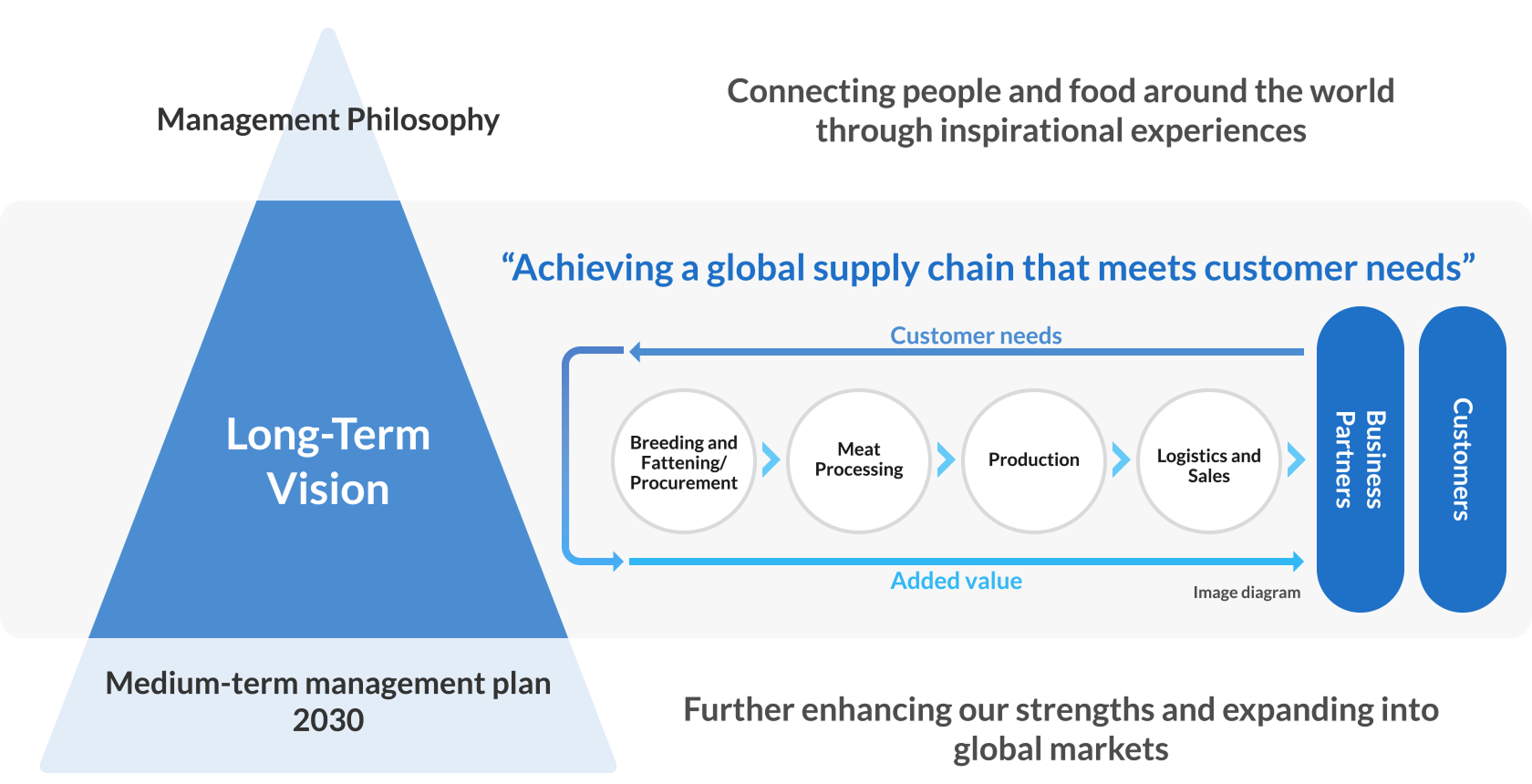
In response to the rapidly changing business environment and the increasingly diverse and sophisticated expectations of our stakeholders, Company has newly formulated a “Long-Term Vision” looking ahead to the next ten years.
Our core strength lies in our ability to deliver high-value-added products and services through a comprehensive meat supply chain. With this strength, Company aims to build a supply chain that accurately captures and responds to the needs of customers around the world—this is the essence of our Long-Term Vision.
 Medium-Term Management Plan 2030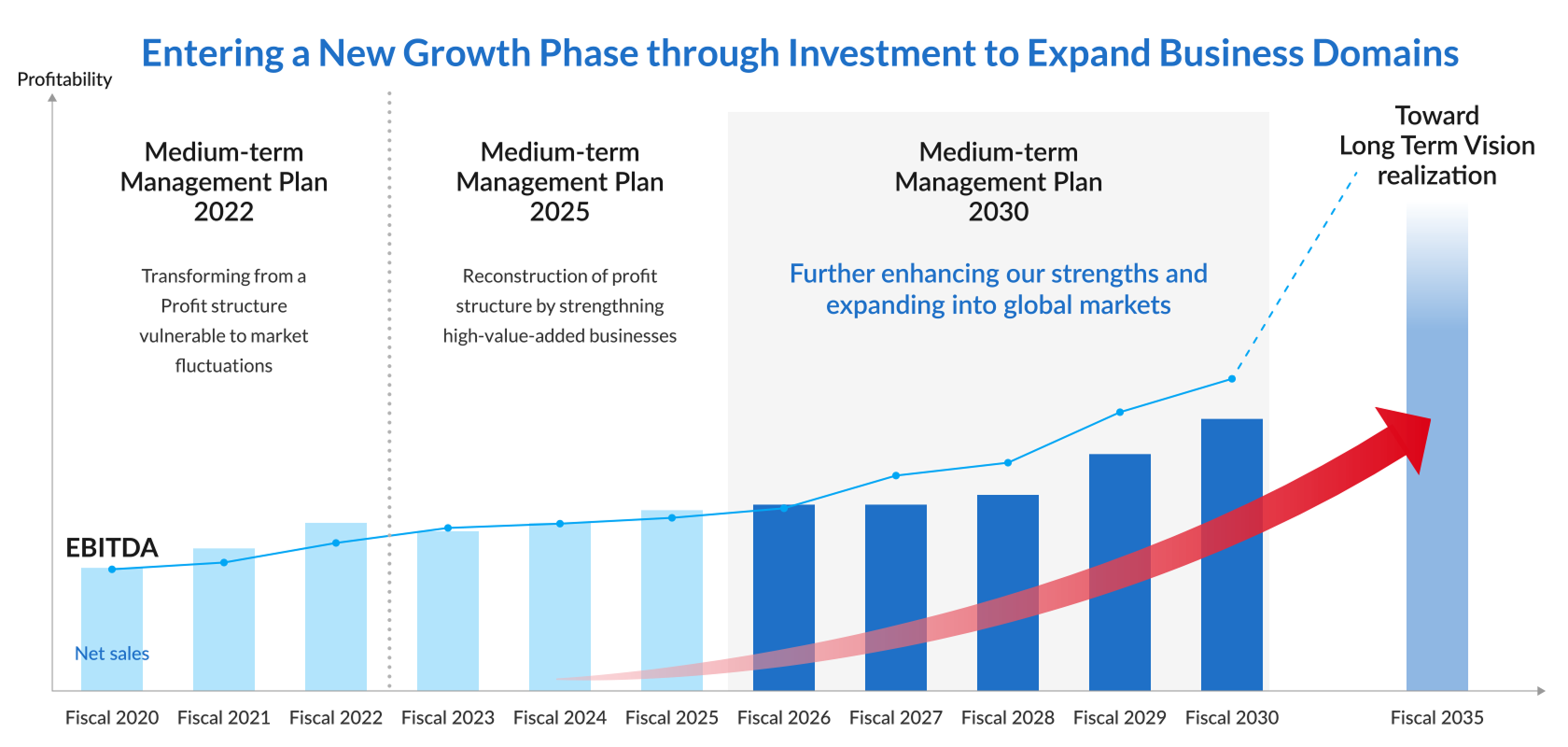
As a milestone toward the realization of our Long-Term Vision, we have formulated the Medium-Term Management Plan 2030.
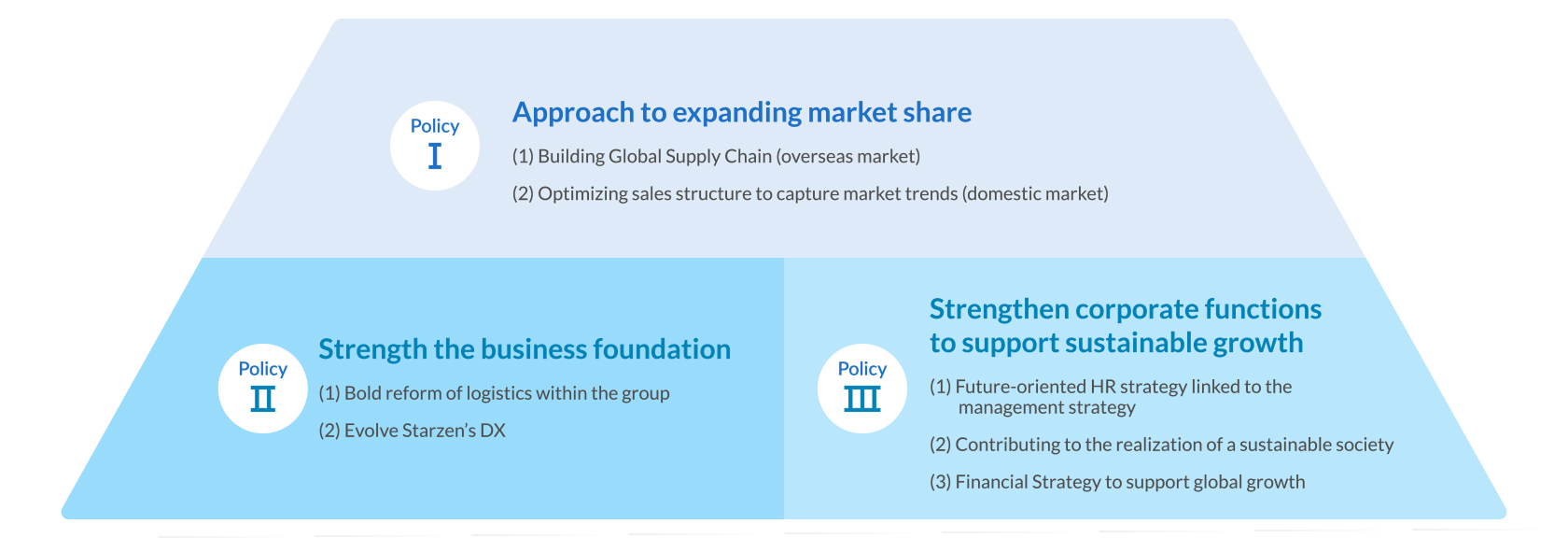
To achieve the objectives of this Medium-Term Management Plan, we will advance our initiatives based on three basic policies as core pillars.
Please note that the theme of the Medium-Term Management Plan 2030, “Expanding into global markets,” requires a certain period to build a solid foundation. Therefore, the plan is positioned as a five-year plan.
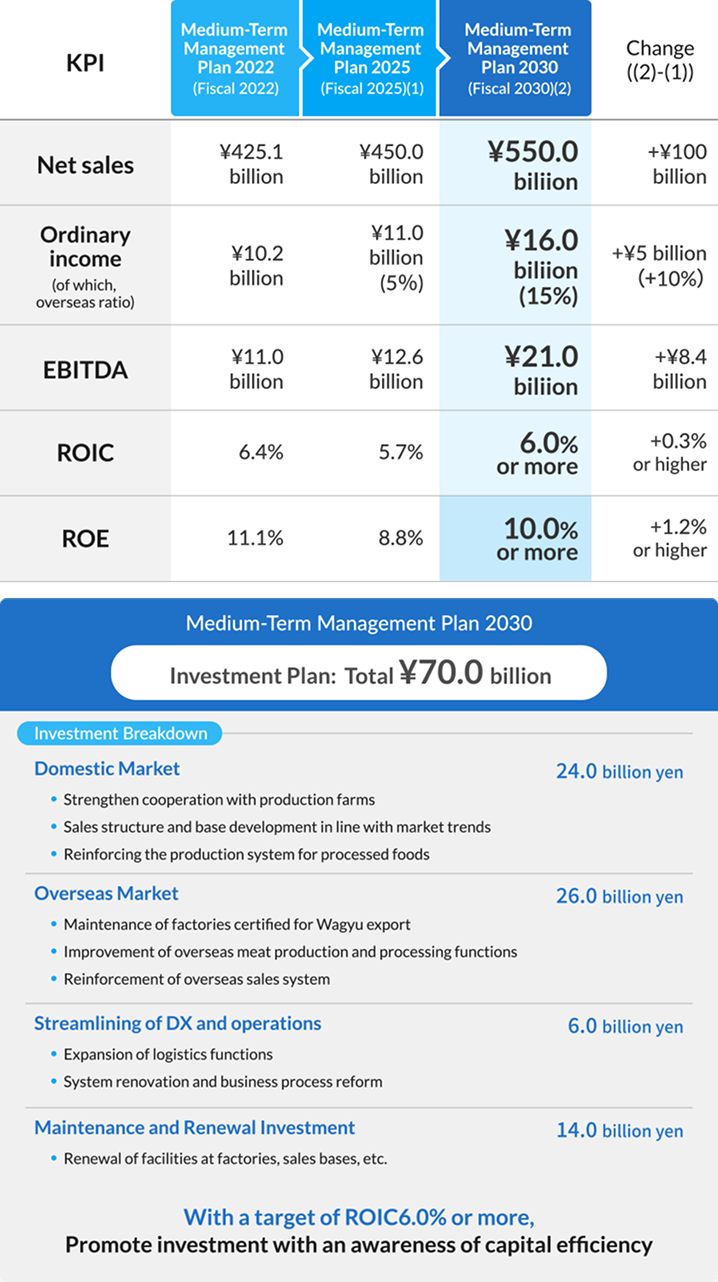
 Financial Targets
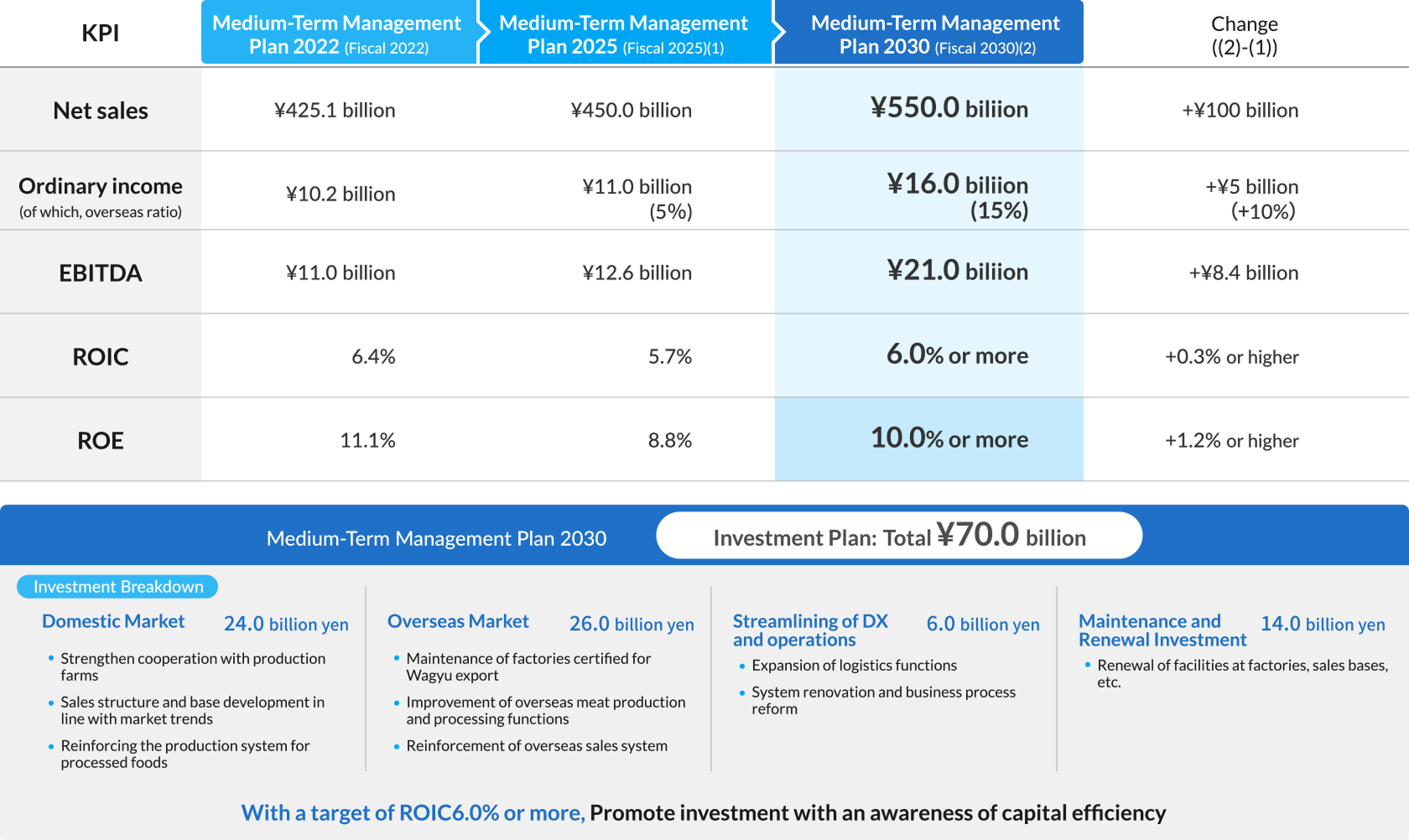
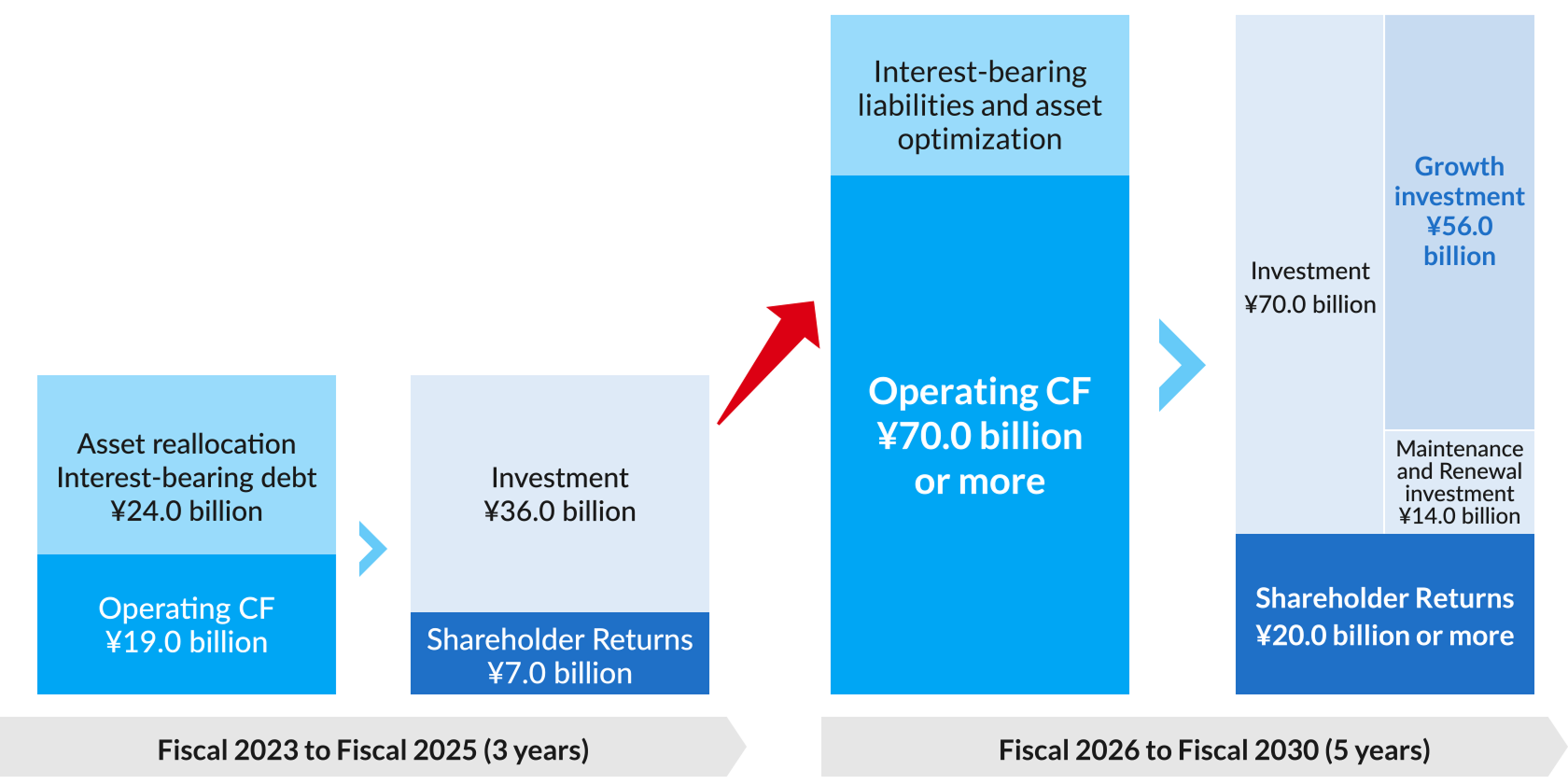
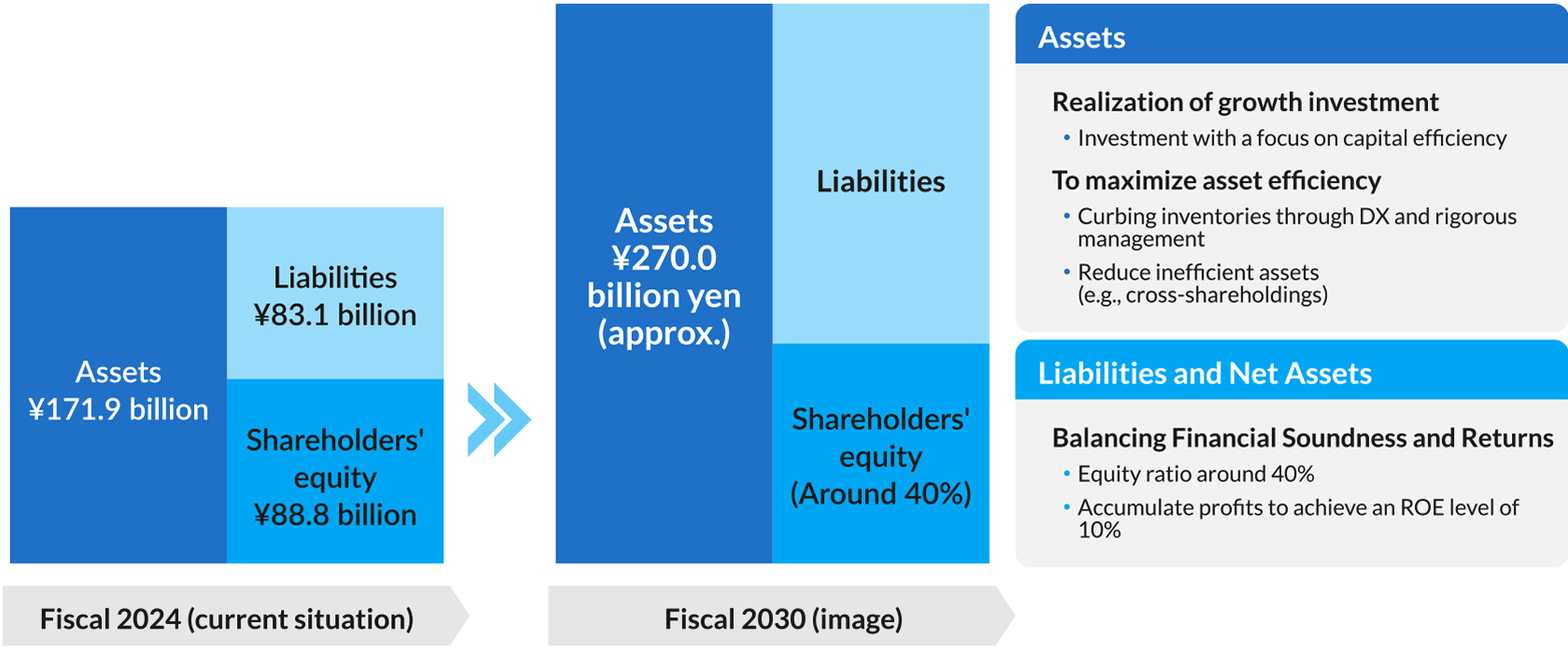
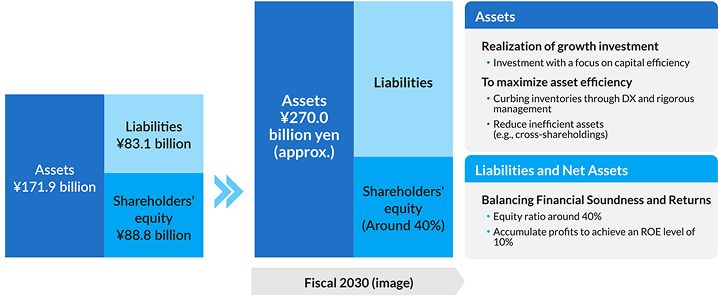
Aiming to achieve ROE of 10% or higher through growth-oriented investments.
 Three Basic Policies
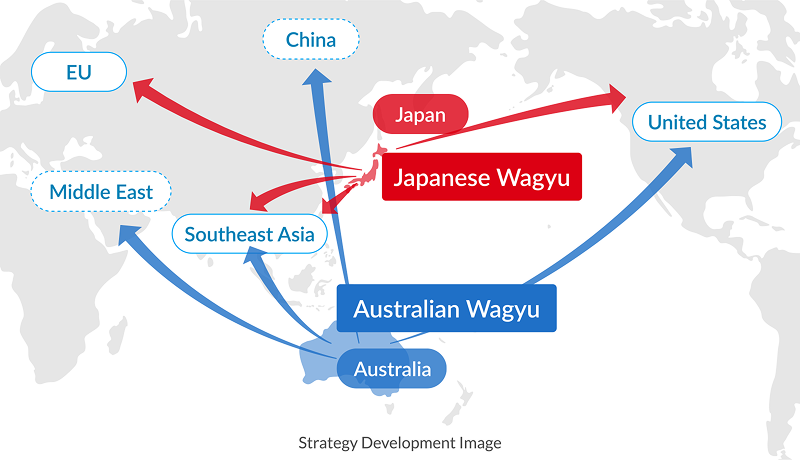
Refine our strengths in line with local food culture and eating habits,
and take on the challenge
of a growth market
Important measures
Further refine our product and proposal capabilities to achieve lifestyle changes and polarization of consumption
Important measures

Further promote logistics reforms to overcome domestic logistics issues
Important measures
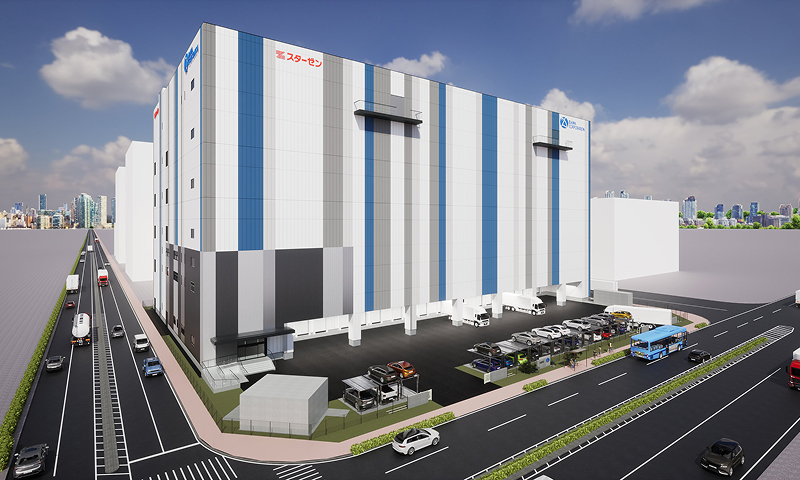
Group's core distribution base
Higashi-Ogishima Center
(scheduled to start operation in August 2026)
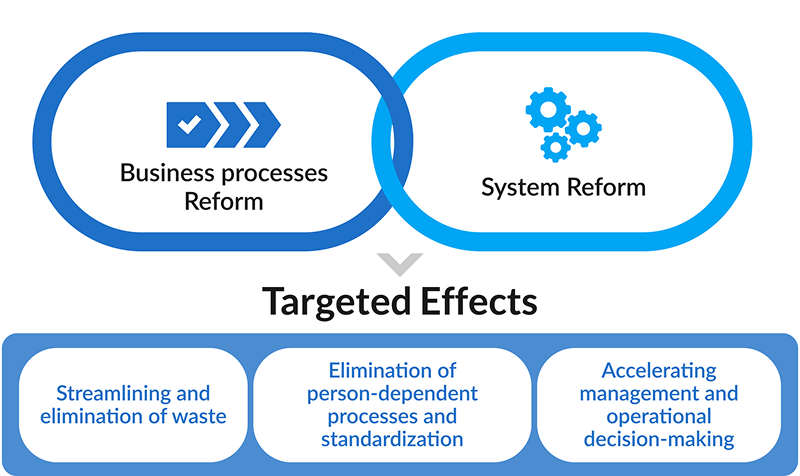
Accelerating Reforms through the twin pillars of Operations and Systems
Important measures
Building a talent portfolio that accelerates diverse challenges
Important measures

By taking action with diverse partners, lead to solutions to social issues
Important measures
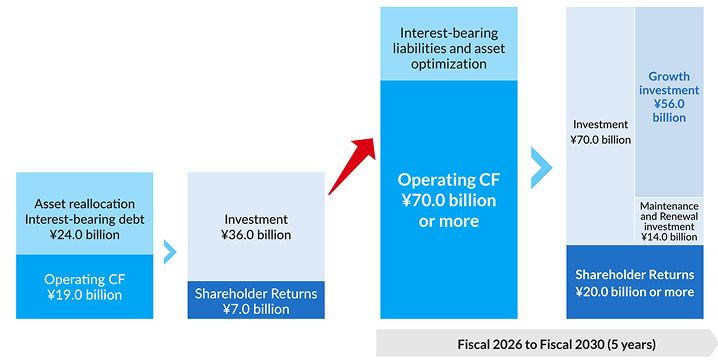
 Financial Strategy
The major risks that the Group recognizes as having the potential to materially impact its financial position, operating results, and cash flows are described below. Note that this is not an exhaustive list of all risks. The Group may be impacted in the future by risks that are currently unforeseeable or deemed insignificant.
At the Starzen Group, we have established a system where the Risk Management Committee discusses issues and measures related to group-wide risk management and promotion in accordance with the Risk Management Regulations and the Risk Management Department plays a central role in accurate management of various risks surrounding the business and a proper response to risks that materialize.
Forward-looking statements below are based on the Group’s judgment as of the end of the fiscal year under review.
The Starzen Group carries food products that are essential to people’s lives, and we recognize that we have a responsibility to society to ensure food safety. In order to fulfill this responsibility, the Group promotes various initiatives to ensure food safety. However, there is a risk that incidents falling outside of the scope of these initiatives may occur, such as quality problems that affect society as a whole. Furthermore, we take every precaution to manufacture our products in accordance with both food hygiene and health and safety standards. However, there is no guarantee that we can completely avoid the risk of product defects.
If such risks materialize, a large-scale product recall, product liability claims, loss of public trust, and other consequences could result in substantial costs and decreased sales volume. This, in turn, could have a significant negative impact on the Group’s financial position, operating results, and cash flows.
In response to such risks, the Group has established a system to provide safe and secure food products by acquiring Safe Quality Food (SQF) certification at 57 business locations to ensure the safety and quality of its food products. We have also established a Quality Assurance Division as a corporate organization. By assigning members of this division throughout the Group, we have established a system that allows us to manage the quality control and assurance of the Group in an integrated manner. The Group recognizes ensuring food safety and security as one of its most important issues to address, and will continue to further strengthen its quality control and assurance system.
The Group’s main product is meat. There is a risk of reduced procurement due to delayed growth of livestock due to abnormal weather or outbreaks of livestock diseases. There is also a risk of substantial fluctuations in meat prices due to changes in supply and demand both at home and abroad.
If such risks materialize, a decrease in the amount of meat procured, an increase in procurement prices, or a decrease in selling prices could result in a decrease in gross profit.
In response, we diversify the risk of reduced procurement volume due to livestock diseases and other factors by geographically dispersing affiliated farms, procuring from a large number of allied livestock producers in Japan, and importing from multiple countries. In addition, to mitigate the risk of fluctuations in meat prices, we procure meat based on forecasts of fluctuations in supply and demand, thoroughly manage inventories at appropriate levels, and work on strengthening the development and sale of meat products with higher added value.
In the event of an extended outbreak of a contagious or infectious disease, or any other such disease, the potential risks to our business include increased consumer preference for low-priced products due to economic slowdown, reduced demand for food services, significant price fluctuations in imported goods due to shifts in the balance of supply and demand overseas, and increased uncertainty regarding the creditworthiness of business partners. In addition, if infection were confirmed among the Group’s employees, there is a risk that the supply of products could be disrupted due to a partial shutdown of operations.
If such risks were to materialize, there could be a decrease in operating income due to sluggish sales of relatively high-priced Wagyu beef and commercial products for the food service industry, increased costs for product procurements, defaults on accounts receivable, and missed sales opportunities arising from suspension of operations.
Despite these risks, we recognize that we have a responsibility to provide a stable supply of food essential to people’s daily lives, and we will fulfill this responsibility by implementing the measures below.
In the event of a natural disaster such as a major earthquake or fire, or an accompanying large-scale power outage, or an extreme weather event such as a large typhoon or heavy snowfall that causes extensive damage to production and storage facilities or to roads, ports, and other infrastructure used for shipping, there is a risk that it could take a long time to restore production and shipping. There is a risk that this may cause a disruption in the domestic supply-demand balance, resulting in significant fluctuations in the market price of meat. In addition, there is a risk that natural disasters may cause damage to employees, offices, and facilities, creating difficulty for the Group’s business operations.
If such risks materialize, the potential impacts include a decrease in sales due to delays in shipments, fluctuations in gross profit due to changes in market prices, or temporary losses due to deterioration in the quality of inventory in storage or damage to our facilities.
In response to such risks, the Group has a system in place that allows us to maintain a certain degree of mutual complementarity between meat product manufacturing, storage, and sales facilities located throughout Japan in the event that these risks materialize.
The Starzen Group is engaged in business activities in North America, Europe, Oceania, Asia, and other areas outside of Japan. We will continue working to further expand our overseas business. However, in expanding these overseas business activities, there are risks of restrictions being imposed due to various factors, including the following:
If such risks materialize, the Group’s business activities may be restricted in various ways, causing its financial position and operating results to deteriorate.
In response to such risks, the Group will strive to gather information on the country in question when setting up new operations overseas. We will organize this information using mega-trend analysis and other methods to proceed with decision-making while assessing the degree of risk. Furthermore, in the event of any social unrest, we will promptly conduct safety checks for expatriate employees and their families. At the same time, we will provide instructions and education to ensure their safety in accordance with the guidance of local authorities and the Japanese embassy.
If compliance issues arise, including violations of laws and regulations by individual officers or employees, there is a risk of the Group losing public trust.
If such risks materialize, the Group’s business activities may be broadly restricted, bringing about a serious negative impact on its financial position, operating results, and cash flows.
In response to such risks, the Group has established a Compliance Committee and other compliance systems. At the same time, we are working to foster and improve compliance awareness through such measures as familiarizing all officers and employees of the Group’s common compliance rules, code of conduct, and corporate behavior guidelines.
The Starzen Group handles a wide range of information in the course of its business activities. As such, there is a risk of information leakage, destruction, tampering, loss, or prolonged access restrictions arising from unforeseen levels of natural disasters, extended power outages, computer virus infection, unauthorized access, or other such incidents.
If such risks materialize, the leakage of confidential information or other such incident could result in a loss of public trust or business activities may be broadly restricted due to the loss of information integrity and availability, bringing about a serious negative impact on the Group’s financial position, operating results, and cash flows.
In response to such risks, the Group has implemented the following main measures:
In the course of its business activities, the Group is at risk of creating environmental pollution as a result of accidents, negligence, or other incidents, which could give rise to liability for damages resulting from such pollution, or additional social demands for environmental protection.
If such risks materialize, the Group’s profits may decrease due to costs associated with environmental restoration, payment of damages, costs related to addressing additional social demands, or loss of public trust if the Group is unable to meet social demands.
In response to such risks, the Group observes environmental regulations and promotes initiatives such as the following to engage in environmentally friendly management for which there has been strong social demand in recent years:
The Group conducts certain import and export transactions of raw materials and products in foreign currencies. In addition, the financial statements of overseas affiliates are prepared in foreign currencies. As such, the Group is exposed to risks related to fluctuations in foreign exchange rates.
Fluctuations in foreign exchange rates impact the revenue and expenses related to the Group’s import and export transactions, as well as the yen-equivalent amounts of foreign currency-denominated trade payables and receivables. These fluctuations also affect the translation of amounts in the financial statements of overseas affiliates into yen, thereby impacting the Group’s financial position and operating results.
The Group enters into forward exchange contracts to mitigate the impact of foreign exchange rate fluctuations on export and import transactions. However, if exchange rate fluctuations occur beyond the anticipated range, the mitigation effect may not be fully realized.
There is a risk that the Group may not be able to recover the initial amount invested in its capital due to a decline in profitability caused by changes in the business environment that were not anticipated at the time of investment. This includes higher procurement costs due to global supply and demand fluctuations, higher manufacturing costs due to labor shortages, and intensified competition due to shrinking of the domestic market.
If such risk materializes, the book value of the capital assets will be reduced to the recoverable amount, and an impairment loss will be recorded.
The Group seeks to minimize this risk by gathering members from relevant departments to hold an Investment and Financing Review Meeting when making significant investments. During these meetings, the appropriateness of investment plans, including the underlying assumptions, is thoroughly examined. In addition, after the investment is made, we continuously monitor the investment performance and analyze discrepancies between planned and actual results. This allows us to implement appropriate improvement measures.
Due to the declining labor force resulting from an aging population and a low birthrate and changes in the employment environment leading to the outflow of human resources, it is becoming increasingly difficult for companies to recruit, retain, and develop human resources. If the Starzen group is unable to recruit the required number of employees or effectively develop human resources, there is a risk that this could lead to a decline in its competitiveness, shortages in the supply of products and goods, and ultimately have a negative impact on the group’s business performance.
In light of this risk, the Starzen group views human resources as its most important management resource. Having incorporated “Become a Company Where Our Employees Are Happy to Work” and “Grow through Our Work” in its Management Philosophy, the group strives to establish a workplace environment that enables a wide range of human resources to fulfill their potential, while also ensuring its system of evaluation, education, and training leads to their development.
The Starzen Group (the Company) strives for transparent, fair, prompt, and appropriate information disclosure to build long-term relationships of trust with all stakeholders, including our shareholders and investors.
The Company discloses information on various decisions, events, and financial results in an appropriate manner in accordance with the Financial Instruments and Exchange Act and other relevant laws and regulations, as well as the Timely Disclosure Rules established by the Tokyo Stock Exchange.
At our discretion, we also strive to actively disclose information that is not subject to the Timely Disclosure Rules if it is deemed useful for promoting understanding of the Company.
Information subject to the Timely Disclosure Rules is disclosed on the Timely Disclosure Information System (TDnet) provided by the Tokyo Stock Exchange with the rules. We also publish the information on the Company’s website without delay.
Annual securities reports and quarterly reports are disclosed on the Financial Services Agency’s Electronic Disclosure for Investors’ NETwork (EDINET) system, as well as promptly published on the Company’s website.
Note that information published on the Company’s website may contain different expressions than what is used in the information disclosed via other means. Thank you for your understanding.
We have established the Rules on the Prevention of Insider Trading to properly manage important corporate information, prevent insider trading, and disclose information in a fair manner. At the same time, we promote thorough awareness and understanding of information management among all Group officers and employees.
Other than facts from the past to the present contained therein, the plans and forecasts disclosed by the Company are based on judgments and certain assumptions made from information available as of the time of disclosure. The Company does not guarantee the results. Actual results may differ from the plans and forecasts due to various risks, uncertainties, and economic conditions.
To prevent information leakage and ensure fairness, the Company establishes a quiet period from the day after the last day of each fiscal period until the announcement of financial results. During this period, we refrain from commenting on financial results and performance and answering questions.
However, even during the quiet period, if the actual results are expected to significantly deviate from the financial forecast, appropriate information will be disclosed in accordance with the Timely Disclosure Rules.

